
Presenting the first INTEGRATES research at the Panhellenic Scientific Conference
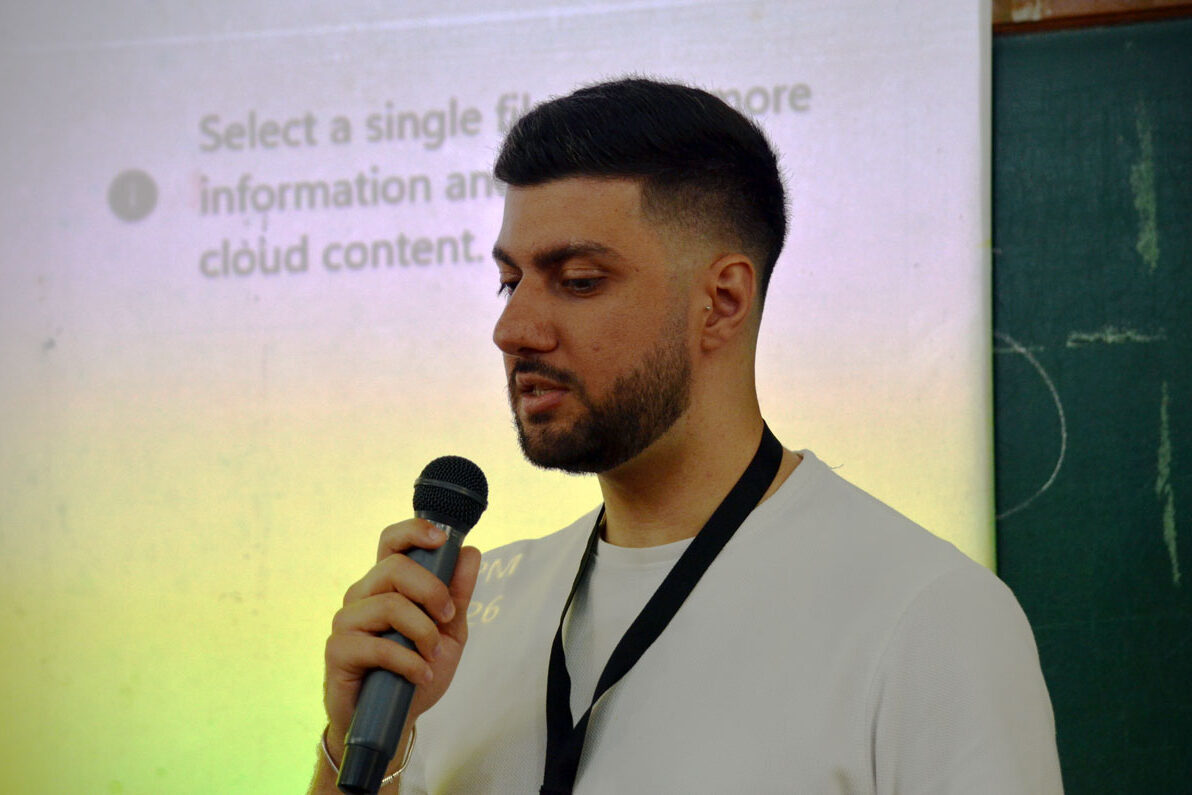
Photo: Panhellenic Scientific Conference
INTEGRATES presented its first research contributions at the 15th Panhellenic Scientific Conference of Chemical Engineering, showcasing new approaches to improving interoperability and intelligence in Digital Twin environments for buildings.
From building models and technical systems to sensors and operational data, information in buildings is often fragmented across multiple sources.
At the 15th Panhellenic Scientific Conference of Chemical Engineering, held in Chania, Crete, between June 3 and 5, 2026, INTEGRATES presented two contributions addressing this challenge and exploring how Digital Twin environments can support more connected and interoperable building information.
The contributions were authored by Filippos Lygerakis, Alexandros Malisovas, Elisavet Tsekeri, Alessandra Lilli, Nikolaos A. Diangelakis and Despoina Kolokotsa from the Technical University of Crete (TUC).
- In the presentation Neurosymbolic Data and Knowledge Architecture for Digital Twin Applications in the Building Sector, the TUC research team explored one of the key challenges facing Digital Twins in buildings: the fragmentation of information across building models, technical systems, sensors and operational data.
- A second contribution, Neural Enhancement Layer for Time-Series Intelligence in Neighborhood-Scale Digital Twin Environments, focused on the development of analytical services for processing large volumes of operational data.


The work demonstrated a workflow for time-series processing, automated classification, anomaly analysis and forecasting using multi-year electricity consumption and weather data collected on the TUC campus.
Together, the two presentations provide complementary perspectives on what we are developing in INTEGRATES.
- The first contribution focuses on creating a shared semantic foundation for building data.
- The second demonstrates how advanced analytics can be applied to generate actionable insights from operational information.
These contributions show INTEGRATES progress towards integrating interoperability, knowledge representation and artificial intelligence within a common Digital Twin framework. By addressing both data integration and analytical capabilities, this work supports the broader objective of transforming fragmented building information into structured, reusable and decision-supporting knowledge.
other events
-
Advancing Digital Twin intelligence for the built environment at SpliTech 2026
-
Presenting the first INTEGRATES research at the Panhellenic Scientific Conference
-
INTEGRATES at BIM Days 2026